
Speaker
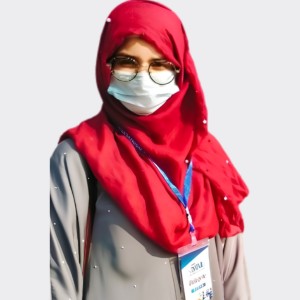
Ayisha Ayub
- Muhammad Gatrad Artificial Limb & Clubfoot Center
- Pakistan
Presentation
Bridging the gap in clubfoot care: A framework for sustainable rehabilitation in low-resource settings
- April 08-09, 2027
- Dubai, UAE
Biography
Ayisha Ayub completed her M.Phil. in Molecular Biology and is currently serving as Head of Research at the Clubfoot Center and Cleft Hospital Pakistan. Her work focuses on clinical research, congenital deformities, rehabilitation, cleft care, pediatric health, and multidisciplinary healthcare development in Pakistan. She has been actively involved in research planning, manuscript development, data analysis coordination, and academic writing for projects related to clubfoot, cleft lip and palate, caregiver psychology, audiology, nutrition, and public health. She has contributed to 11 scientific publications and continues to support evidence-based clinical practice through institutional research initiatives. In addition to her institutional research role, she also serves as a reviewer for esteemed scientific journals, including the Cleft Palate Craniofacial Journal (CPCJ), where she contributes to the peer-review process and academic quality improvement. Through her work at the Clubfoot Center and Cleft Hospital Pakistan, Ayisha Ayub is committed to strengthening locally led research, improving pediatric care systems, and promoting sustainable, multidisciplinary healthcare approaches for children and families affected by congenital conditions.
Abstract
Objective: To describe the development, evolution, and operational framework of a sustainable clubfoot care and rehabilitation model established in Gujrat, Pakistan, and to highlight its role in reducing preventable childhood disability in a resource-constrained setting.
Methods: This technical report presents the phased development of a locally led clubfoot program initiated in 2010. The model evolved from a single-room outpatient clinic into a comprehensive rehabilitation hub providing Ponseti-based correction, prosthetic and orthotic services, physiotherapy, and structured long-term follow-up. Patients with congenital and neglected clubfoot were enrolled consecutively through routine clinical services without selective inclusion. Program components, service delivery structure, workforce development, follow-up mechanisms, and functional outcomes were reviewed.
Results: More than 2,000 patients with congenital and neglected clubfoot were enrolled, generating approximately 20,000 cumulative patient encounters. The majority were pediatric idiopathic cases, while older children and adults with untreated deformities were also managed. Most patients achieved functional, pain-free, plantigrade feet with independent ambulation. Programmatic outcomes included improved brace compliance, sustained follow-up, increased school participation among pediatric patients, and return to work among adult patients. The model demonstrated the importance of phased infrastructure development, locally trained multidisciplinary teams, longitudinal care pathways, and financial sustainability through hybrid social enterprise mechanisms.
Conclusion: The Gujrat clubfoot care model demonstrates that sustainable disability reduction is achievable in low- and middle-income settings through locally led, capacity-aligned service development. By integrating standardized Ponseti-based treatment, rehabilitation, assistive services, long-term follow-up, and sustainable financing, this framework offers a replicable approach for improving access to clubfoot care and preventing lifelong disability in similar resource-constrained contexts.
