







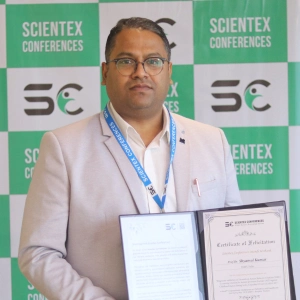








Thorik Aziz
UIN Madura, IndonesiaPresentation Title:
Transforming pediatric mental health: An innovative hybrid self-training model for early childhood social-emotional development
Abstract
Early childhood social-emotional development requires active and responsive learning approaches. Current educational practices remain dominated by conventional methods treating children as passive knowledge recipients. Traditional teacher-centered approaches fail to accommodate individual learning variations. These methods create disconnections between classroom instruction and real-world application. Research demonstrates that passive learning models produce graduates who experience difficulty transferring academic knowledge into practical social contexts. Contemporary early childhood education needs pedagogical innovation, transforming children from passive recipients into active knowledge constructors. This study analyzes the potential ofthe Hybrid Self- Training approach for early childhood social- emotional development. The investigation examines five core components. These components include play-based learning serving as a developmental foundation, responsive scaffolding supporting proximal development zones, metacognitive reflection building self-awareness, digital technology integration providing learning support, and contextual learning connecting classroom experiences to real-world situations. The research aims to develop a conceptual framework for implementing this innovative approach across early childhood educational programs.
Methodology
Qualitative library research employed systematic content examination of peer-reviewed journal articles and primary reference books. Data sources covered publications from the past fifteen years related to early childhood social-emotional development. Thematic coding identified key concepts. Peer debriefing sessions with early childhood education specialists enhanced research credibility. The analytical process followed inductive qualitative content analysis methods. Results identified five essential components forming the Hybrid Self-Training framework. Advantages include personalized learning pathways matching individual needs, increased learner motivation through autonomous activity selection, enhanced metacognitive capabilities supporting emotional regulation, seamless integration of social-emotional and academic development, and successful adaptation to digital learning environments. Implementation challenges encompass comprehensive educator preparation requirements, a delicate balance between learner autonomy and learning structure, assessment instrument complexity, limited resource availability, and substantial variations across children's developmental readiness levels. Hybrid Self-Training demonstrates promising potential for optimizing early childhood social- emotional development. Successful program implementation requires systematic educator preparation, developmentally appropriate assessment instruments, adequate resource allocation, and individualized approaches matching each child's unique readiness level. Future research should investigate outcomes and construct practical implementation guides adaptable across diverse early childhood educational settings.
Biography
Thorik Aziz, M.Pd., was born in Sumenep, Indonesia, on November 11, 1992. He earned his Bachelor's degree in Islamic Education from INSTIKA Sumenep (2014) and Master's degree in Early Childhood Islamic Education from UIN Sunan Kalijaga Yogyakarta (2015). Currently, he is completing his Doctoral studies in Early Childhood Islamic Education at the same institution (2021-present). Thorik serves as a faculty member at the Early Childhood Islamic Education Program, UIN Madura. His research expertise focuses on early childhood education, Islamic education, and digital media integration in learning environments. He has demonstrated exceptional academic productivity with over 20 scholarly publications, including books and journal articles published between 2020 and 2025. His research contributions address special needs education strategies, Islamic value internalization in digital- age families, childhood creativity development, and early childhood education transformation. Thorik actively engages in teaching and research activities while collaborating with educators and policymakers to bridge theory-practice gaps affecting early childhood education quality. His professional commitments include advancing equitable access to high-quality early learning experiences supporting holistic child development.