



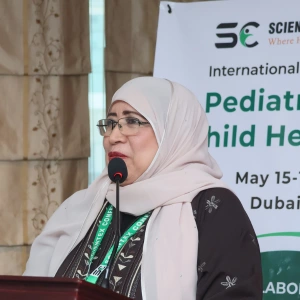












Kiran Kumari
All India Institute of Medical Sciences (New Delhi), IndiaPresentation Title:
Comparative study to assess mother’s perception and satisfaction regarding care of neonates in mother new born care unit and new born intensive care unit at tertiary level facility
Abstract
Background:
Admission of a newborn to a Newborn Intensive Care Unit (NICU) is an emotionally intense experience for mothers. Conventional Newborn Intensive Care Units (NICUs), although medically advanced, often restrict maternal involvement, potentially affecting maternal bonding, satisfaction, and caregiving confidence. The Mother Newborn Care Unit (MNCU) model, by enabling maternal presence and participation, aims to promote family-centered care. This study aims to evaluate whether the MNCU model provides improved emotional support, satisfaction, and bonding opportunities for mothers. By identifying differences in perception and satisfaction between the two settings, the study aims to generate evidence that could guide improvements in neonatal care practices and promote family-centered care.
METHODS:
A comparative descriptive study was conducted at Vardhman Mahavir Medical College and Safdarjung Hospital, New Delhi, after obtaining ethical clearance [IEC, VMMC/SJH/CERT/DEC-2024/156]. Data were collected from 300 mothers (150 each from MNCU and NICU) between January 29 and March 19, 2025, using a convenience sampling technique. Structured tools were used to assess mothers' perception and satisfaction. Data analysis was done using SPSS version 23 and Microsoft Excel, employing descriptive and inferential statistics.
RESULTS:
Demographic variables were similar between the two groups. In the MNCU group, 89.3% of mothers reported a good perception of neonatal care, compared to 56.7% in the NICU group. Perception scores were significantly higher in domains such as mother-infant bonding and maternal self-efficacy. Regarding satisfaction, 97.3% of MNCU mothers were highly satisfied versus 70.7% in the NICU group. No mothers in either group reported dissatisfaction. Higher satisfaction in MNCU was noted in areas like parental involvement, quality of care, and information, education, and communication.
CONCLUSION:
The MNCU model significantly improves maternal perception and satisfaction, especially in aspects related to emotional bonding, caregiving confidence, and active maternal participation. These findings support the implementation of MNCU to promote family-centered care and enhance the quality of neonatal services.
Biography
TBU